

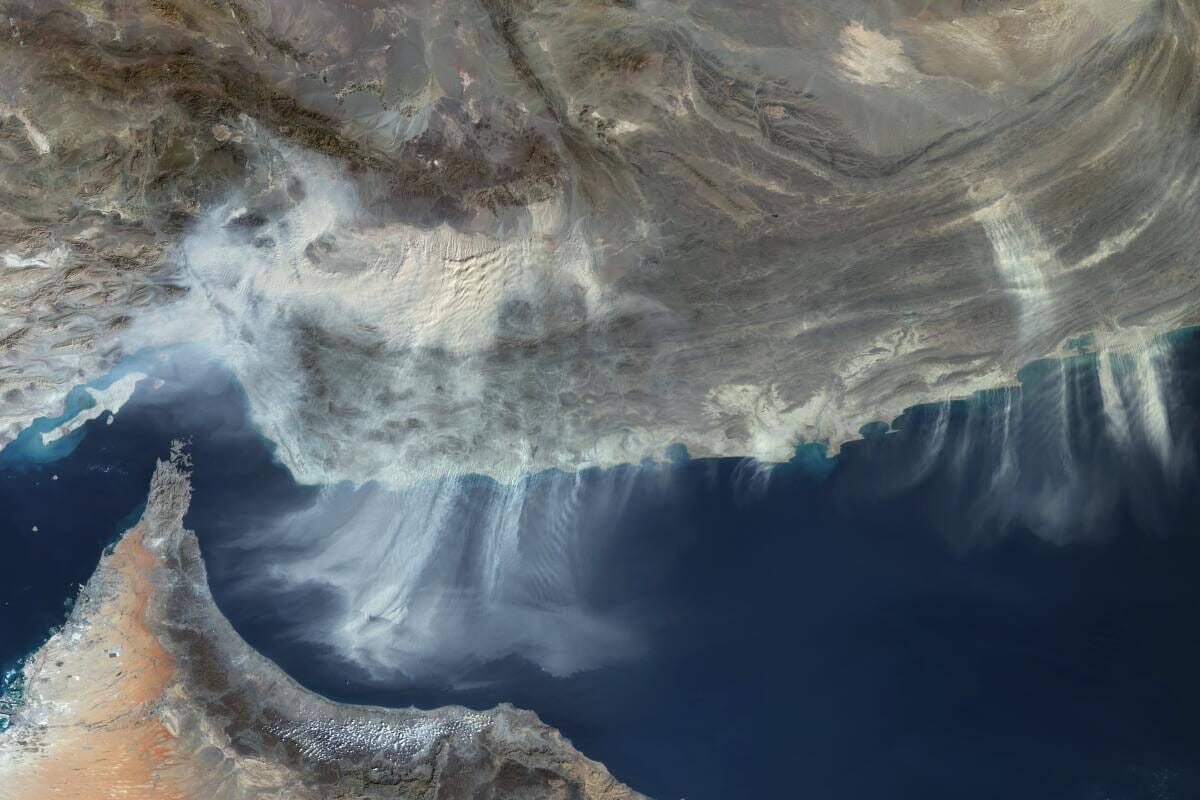
The U.S.-Iran conflict is exposing a brutal truth: fossil fuels do not deliver security. They deliver volatility, higher prices, political distortion, and a system where the public absorbs the pain while oil interests collect the upside.
There is a grim irony at the center of the current U.S.-Iran conflict.
As gas prices rise, as shipping routes tighten, as energy markets lurch from one shock to the next, the crisis is making one fact harder to deny: a society built on fossil fuel dependence is a society built on instability.
That was the core tension running through my recent conversation with investigative journalist Miranda Green, whose reporting has focused on the climate consequences of political power, fossil fuel influence, and the stories governments tell to justify both.
What emerged from our discussion was not just a picture of war abroad. It was a picture of how energy dependence shapes daily life at home. The price spikes. The anxiety. The sense that ordinary people are once again paying for a system designed around somebody else’s profits.
And the deeper implication is even more unsettling: in moments like this, fossil fuels are not merely a commodity. They become leverage.

The public pays. The industry wins.
One of the sharpest points Miranda made was also the simplest.
High gas prices may be “good for America” if your definition of America is limited to oil companies, fossil fuel donors, and the political class that serves them. But they are not good for Americans.
They are not good for families recalculating whether they can afford a trip. They are not good for workers watching inflation eat away at already strained budgets. They are not good for anyone wondering whether another geopolitical shock will push the economy from fragile to genuinely dangerous.
This is the basic scam embedded in the fossil fuel economy: when prices surge, the pain is socialized and the gains are concentrated.
Consumers get uncertainty. Producers get margin.
And in that imbalance, the political economy of war becomes easier to understand.
A crisis of “energy security” that proves the opposite
For years, fossil fuel advocates have sold oil and gas as the backbone of national security. Drill more. Extract more. Depend on “domestic energy.” Accept the damage, because the alternative is vulnerability.
But the Iran crisis exposes the hollowness of that argument.
If a chokepoint halfway around the world can send shockwaves through household budgets, supply chains, airline prices, and national politics, that is not security. That is fragility masquerading as strength.
The more a nation depends on fuel tied to shipping lanes, authoritarian states, militarized trade routes, and commodity speculation, the more exposed it becomes. Not less.
That is the point policymakers still refuse to confront honestly. Fossil fuels do not merely carry a climate cost. They carry a structural instability cost. They tether everyday life to conflict.
The unintended case for electrification
There is, however, a possible backlash built into moments like this.
When prices spike fast enough, people begin to see the hidden cost of remaining locked into gas-powered everything: gas-powered cars, gas heating, gas-dependent infrastructure, gas-dependent supply chains. What was previously “normal” starts to look irrational.
Why should a family’s transportation costs depend on naval tension in the Persian Gulf?
Why should heating a home be vulnerable to geopolitical brinkmanship?
Why should the global economy remain so exposed to a fuel system that repeatedly demonstrates how brittle it is?
That does not mean people can switch overnight. Electric vehicles still carry upfront costs. Home electrification still requires capital. Public infrastructure still lags. But the logic becomes harder to escape: in the long run, electrification is not just a climate strategy. It is a resilience strategy.
Every home that switches from gas heating to electric heat pumps reduces exposure.
Every EV that replaces a gas-powered car reduces vulnerability.
Every grid investment in renewables weakens the political power of petro-states and fossil fuel cartels alike.
The transition may be uneven. But crises like this clarify why it matters.
Meanwhile, the Trump response is to double down
If the lesson of the moment is that fossil fuel dependence is dangerous, the Trump administration appears determined to learn the opposite one.
That is what makes this period so consequential. Instead of treating energy volatility as evidence that the U.S. should accelerate the move to renewables, the administration is using the crisis to justify more drilling, more gas infrastructure, and more support for fossil fuel incumbents.
That is not a contradiction. It is a business model.
In the logic of fossil fuel politics, crisis is not a warning. It is an opportunity.
Higher prices create political cover for more extraction.
War creates political cover for more militarization.
Grid strain creates political cover for keeping dirty plants online.
Economic anxiety creates political cover for presenting old energy as patriotic necessity.
In that sense, the administration’s response is entirely coherent. It is just coherent on behalf of donors, not the public.
The war over the future is also a war over investment
One of the most revealing parts of my conversation with Miranda was the discussion of how public policy is being used not simply to protect fossil fuels, but to actively suppress cleaner alternatives.
This is the part of the story that often gets buried. The issue is not just that oil and gas companies want favorable treatment. It is that political power is now being deployed to steer capital away from renewables and back toward legacy fuels.
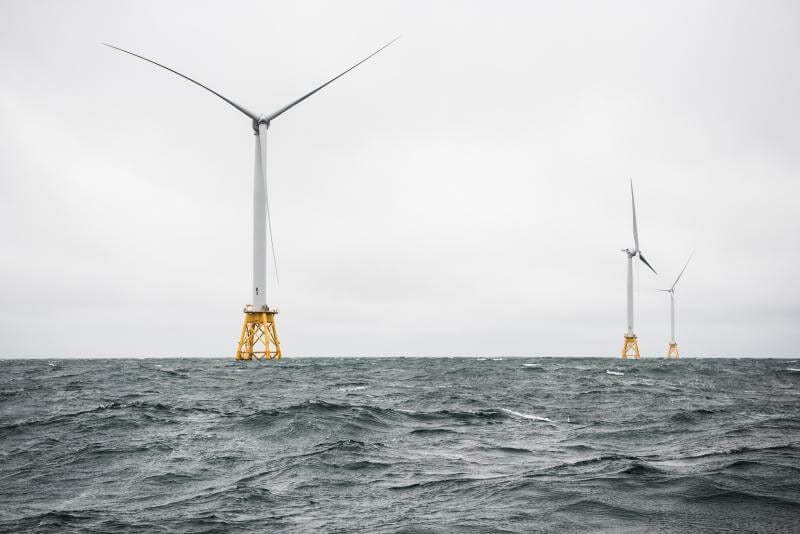
When governments interfere to slow offshore wind, prolong coal, subsidize LNG, or treat fossil buildout as national destiny, they are not defending market freedom. They are distorting the market to preserve an aging order.
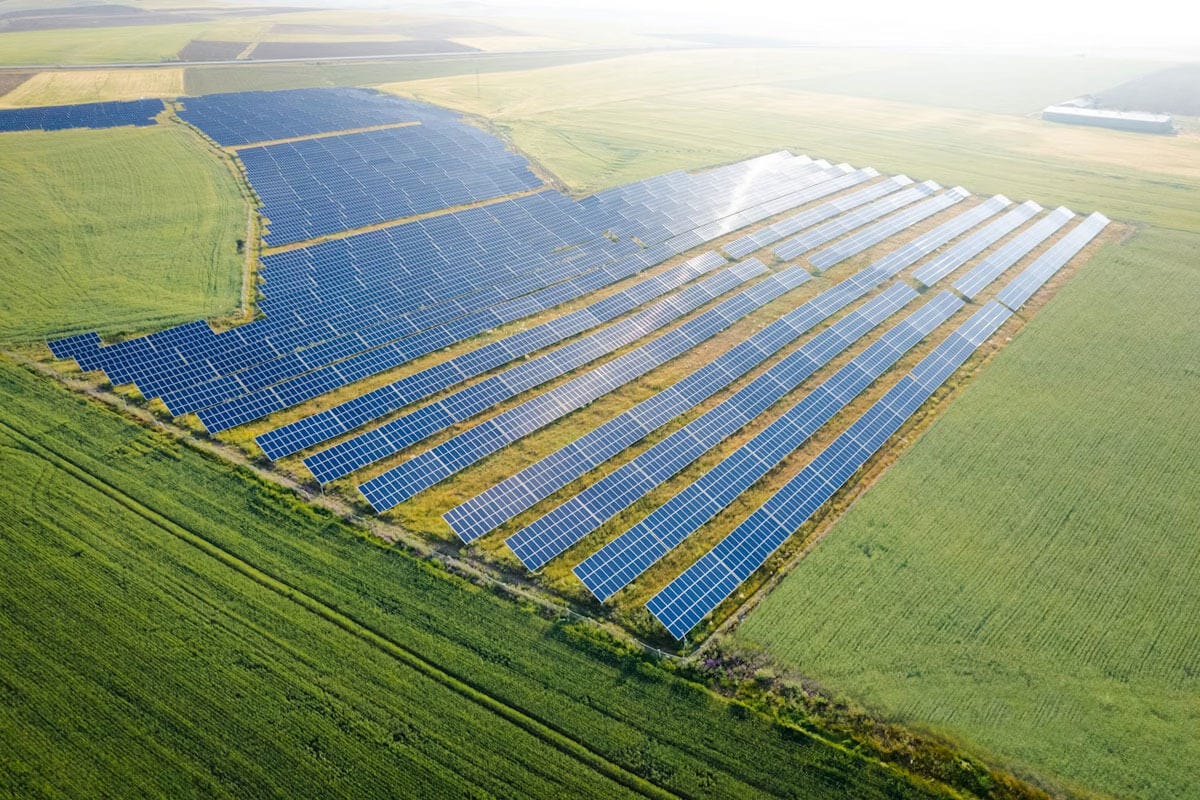
That matters because the economics of clean energy are no longer theoretical. Solar and wind have matured. Storage is advancing. Electrification is scaling. The old argument that fossil fuels must dominate because there is no viable alternative is collapsing.
So the fight becomes more naked.
If fossil fuels can no longer win cleanly on economics, they will try to win through politics.
China understands the strategic reality
One of the most important contrasts Miranda raised was China.
Unlike the United States under Trump, China appears to understand that the future of power is not just about who has oil. It is about who controls the technologies that replace oil. Solar. Wind. Batteries. Critical minerals. Electric vehicles. Grid infrastructure.
That does not make China benevolent. It makes China strategic.
A country that can scale clean energy rapidly reduces its exposure to fuel shocks, strengthens industrial capacity, and positions itself to dominate the next era of global manufacturing. A country that clings to fossil dependency, by contrast, risks becoming the defender of a declining system.
This is what makes the current U.S. posture so self-defeating. Washington is acting as though doubling down on yesterday’s energy order is a show of strength. In reality, it may be an admission of strategic drift.
Coal, AI, and the politics of excuses
Another telling thread in our conversation was the use of AI and grid demand as justification for extending the life of old fossil infrastructure.
This is how reactionary energy politics often works: take a real problem, then use it to force a false solution.
Yes, data centers are increasing power demand.
Yes, grid planning has lagged.
Yes, energy buildout must accelerate.
But none of that requires locking the country into dirtier, older, less efficient fossil assets. It requires speed, transmission, storage, modernized permitting, and a willingness to build the cheapest and fastest clean capacity available.
Instead, the political system keeps reaching for coal and gas because those are the fuels with entrenched constituencies, not because they are the best answer.
The result is a familiar pattern: an emergency gets invoked, and fossil fuel interests walk away with another lease on life.
Dark money keeps the whole machine running
Miranda’s reporting also points to the broader architecture behind these decisions: the dark-money networks, partisan media ecosystems, and corporate influence campaigns that shape how the public understands energy in the first place.
This is not just a policy fight. It is an information fight.
If local journalism collapses and gets replaced by industry-friendly pseudo-news, communities lose the ability to see who is actually shaping their future. If fossil fuel billionaires can finance both candidates and narratives, they do not merely influence legislation. They influence reality as experienced by voters.
That is one reason the clean energy transition has always been about more than technology. The barriers are not only engineering barriers. They are political barriers. Financial barriers. Narrative barriers.
The fossil fuel industry is not surviving because it has the better long-term case. It is surviving because it has spent decades building the machinery to protect itself from consequences.
What this moment should make clear
The central lesson of this conflict is not subtle.
A world organized around fossil fuels is a world organized around coercion, scarcity, price shocks, and war-risk premiums. It is a world in which ordinary life remains hostage to extraction politics.
The alternative is not utopian. It is practical.
Build systems that run on energy sources no navy can blockade.
Build grids that do not depend on one strategic corridor.
Build transportation that does not collapse into panic every time oil spikes.
Build homes that are less exposed to fuel volatility.
Build politics less captive to the industries most invested in delay.
In other words: treat clean energy not as moral branding, but as material independence.
That is the frame the climate movement needs to sharpen.
Not just cleaner.
Safer.
Not just greener.
More stable.
Not just better for the planet.
Harder for oligarchs, petro-states, and war planners to manipulate.
The real choice
The Trump era keeps returning to the same proposition: when instability rises, the answer is more fossil fuels, more force, more control.
But every new crisis makes that proposition look weaker.
The old energy order does not protect us from chaos. It reproduces it.
And if this moment drives more people to see that clearly, then one unintended consequence of this war may be political clarity: the understanding that climate action is not separate from economic security or democratic accountability. It is increasingly the precondition for both.
That is the deeper story here.
Not simply that oil prices are high.
Not simply that a strait is vulnerable.
Not simply that another war is spiraling.
It is that the entire fossil fuel model keeps proving, in real time, that it cannot deliver the stability it promises.
And yet we are still being asked to trust it with the future.
Stay Connected
If you found this analysis useful, subscribe to get future pieces on energy, climate policy, and power dynamics delivered directly to your inbox.
If you’re already subscribed, consider sharing this post or tapping the like button—it helps surface this work to a broader audience. Listen/watch past episodes on Apple, Spotify, iHeart, and YouTube.

Your articles is a reminder that renewable sources is away forward. They are cleaner, brings control and good for the warming environment.
Energy eggs, all in one basket, and whether it was Iran or something else, it was still gonna bubble to the surface to let us know it is precarious to rely on fossil fuel in a long-term