

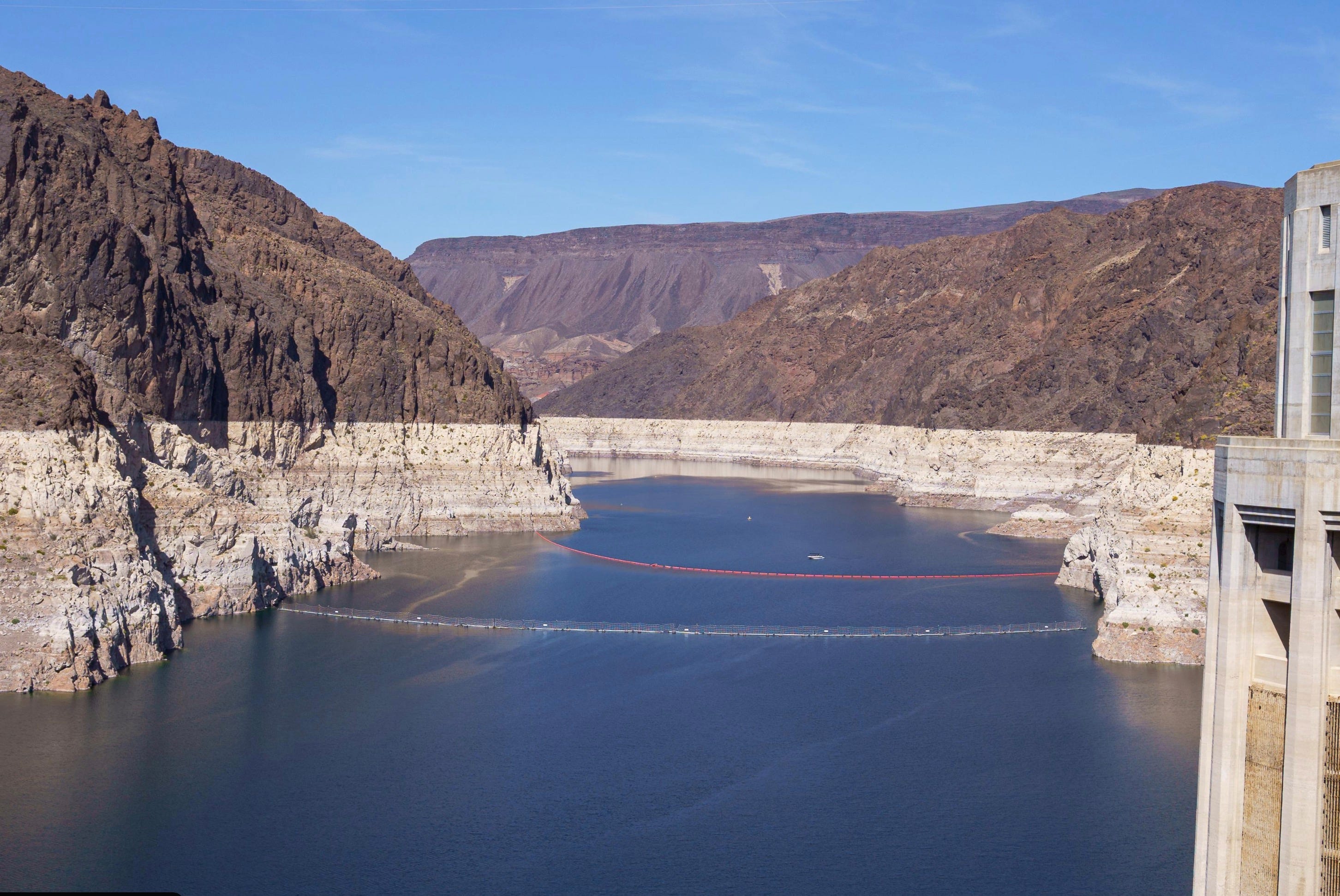
What was once treated as a variable supply problem is now a long-term rebalancing challenge. Reservoirs that were full in 2000 now sit roughly two-thirds empty. The system was engineered to buffer drought. It was not engineered for permanent decline.
On a recent episode of A Climate Change, we spoke with Jennifer Pitt of the National Audubon Society, who has worked on Colorado River governance for more than 25 years. Her assessment is clear: the basin must adapt to a smaller, more volatile river — and consensus among the seven basin states is essential.

35+ Million People, One River
The Colorado River supplies water to more than 35 million people across seven U.S. states and Mexico. It irrigates some of the most productive winter farmland in North America. Roughly 80% of its water supports agriculture.
At the same time:
Snowpack in the Rockies — the river’s primary “natural reservoir” — is increasingly unreliable.
Storage capacity in the basin exceeds four times the river’s historic annual flow.
Today, reservoirs sit near 30% capacity.
The river will not return to 20th-century abundance. The governance must catch up to that fact.
Governance Is the Inflection Point
The legal framework governing the river traces back to the 1922 Colorado River Compact — drafted in a hydrologically wetter era. Current shortage-sharing agreements expire soon. Without a new consensus, the federal government (via the Bureau of Reclamation) would operate the system under limited authority — a blunt instrument when precision is needed.
The basin is divided into two camps:
Upper Basin: Colorado, Wyoming, Utah, New Mexico
Lower Basin: California, Arizona, Nevada
Each side interprets compact language in ways that support its allocation interests. Absent agreement, litigation is plausible — potentially rising to Supreme Court jurisdiction. That route could freeze cooperative environmental progress for years.
Pitt’s position is pragmatic: negotiated consensus produces better outcomes than courtroom escalation.
Agriculture: The Structural Tension
A critical asymmetry defines the system:
Cities use roughly 15–20% of the water.
Irrigated agriculture uses roughly 80%.
Urban conservation alone cannot close the structural deficit.
However, Western water law operates on seniority. Many farmers hold the most senior water rights in the basin. These are property rights under established doctrine. Compulsory takings (e.g., eminent domain) are politically and legally improbable.
What is emerging instead:
Voluntary compensated conservation
Seasonal fallowing
Infrastructure upgrades for efficiency
Market-based water transfers
The economic nuance is important. Even modest reductions in farm production can disproportionately affect rural tax bases and local economies. Basin reform must balance hydrology with socioeconomic stability.
The Ecological Dimension
There is no comprehensive statute protecting the Colorado River as an ecosystem. Some protections flow through the Endangered Species Act, but much of the restoration work is collaborative rather than regulatory.
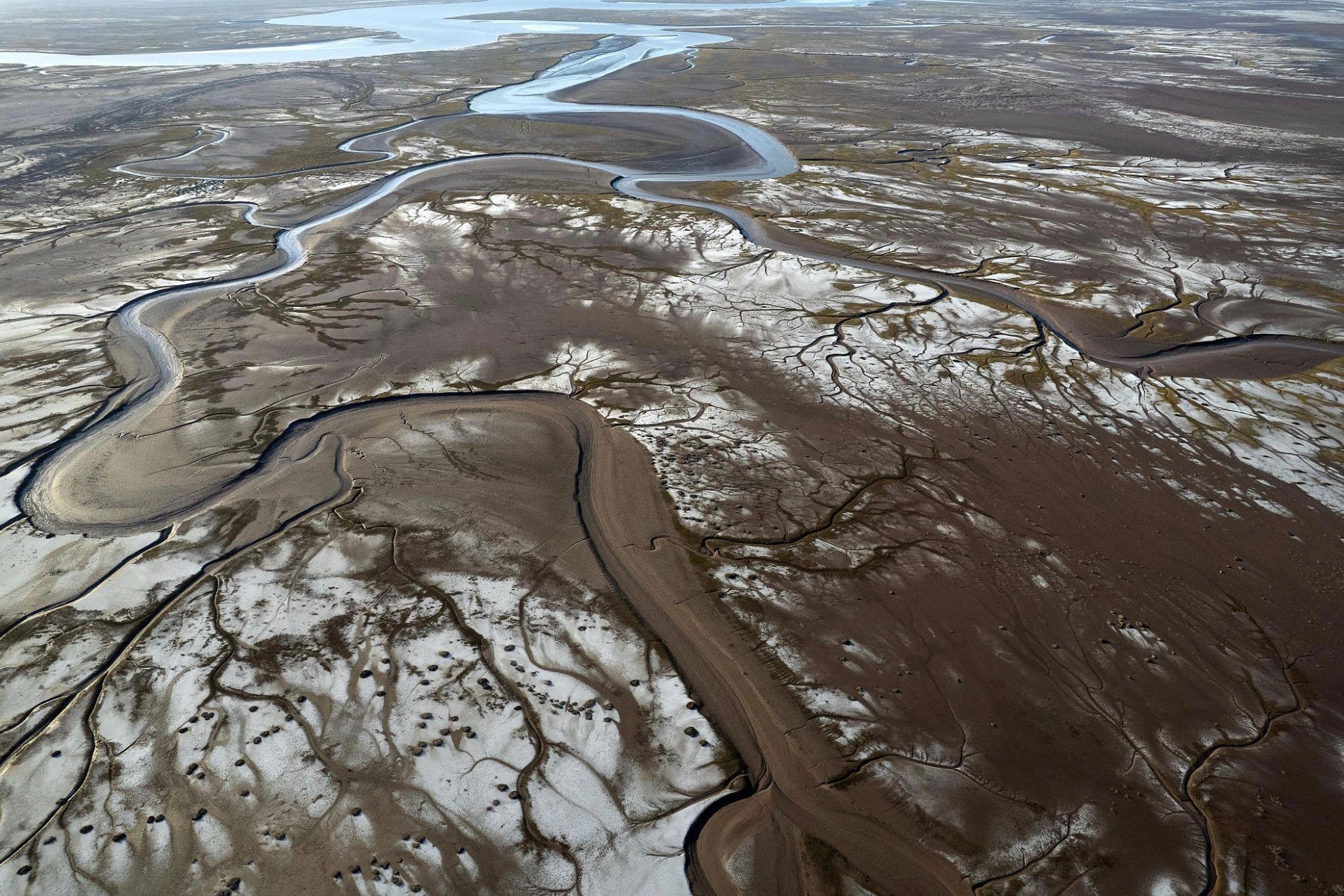
One example: binational agreements between the U.S. and Mexico have restored limited flows to the final 100 miles of the river in the delta region — habitat that had largely disappeared for decades.
In 2023, the Colorado River Indian Tribes adopted a resolution recognizing personhood for the river within their sovereign territory — introducing “rights of nature” principles into basin dialogue. Whether that framework expands beyond tribal lands remains uncertain.
Climate Change: The Non-Negotiable Variable
The most destabilizing factor is warming. Climate models indicate:
Reduced snowpack
Earlier runoff
Higher evaporation
Greater year-to-year variability
The river of the 20th century no longer exists. Governance structures must reflect 21st-century hydrology.
What Cities Should Understand
For residents of Los Angeles, Phoenix, Las Vegas and other basin cities:
Urban conservation works — and is already occurring at scale.
Agriculture must be part of the solution.
Interstate consensus is more stabilizing than litigation.
Flexibility in reservoir management will be critical.
No water user is insulated from long-term scarcity.
This is not an episodic drought. It is a systemic contraction.
The Bottom Line
The Colorado River Basin is not facing imminent collapse. But it is operating within a narrowing margin of error.
The choice before the basin states is straightforward:
Litigate and harden positions, or
Negotiate and adapt to a smaller river.
As Pitt put it: we are all going to have to learn how to use less water.
The river will not return to 20th-century abundance. The governance must catch up to that fact.
Listen to this episode on Apple, Spotify, or iHeart. Watch this episode on YouTube.
The SUPERMAJORITY PLAN TO IMPEACH TRUMP and HIS ADMINISTRATION
It will take 292 house and 67 senate votes to obtain a supermajority vote. This is the key to accomplishing anything in the house or senate. The house and senate will be able to impeach Trump and his administration for their crimes and corruption.
The Democrats are the only ones that will stand against Trump. We have to vote out as many republicans as possible.
EVERYONE IS GOING TO HAVE TO VOTE FOR DEMOCRATS IN THE NOVEMBER 3RD MIDTERM ELECTIONS TO MAKE THIS WORK
Make sure you share this with everyone you know without social media. People without social media are unaware how corrupt and detrimental Trump’s administration really is for our country. The media outlets do not post anything negative about Trump. Some people don’t even know what the midterm elections are or how important they are.
TRUMP, HIS ADMINISTRATION, HIS BILLIONAIRE PEDOPHILE NETWORK , AND THE REPUBLICAN PARTY ARE MAKING IT IMPOSSIBLE FOR THE WORKING CLASS TO SURVIVE.
WE HAVE TO STOP THEM FROM DESTROYING THE COUNTRY