

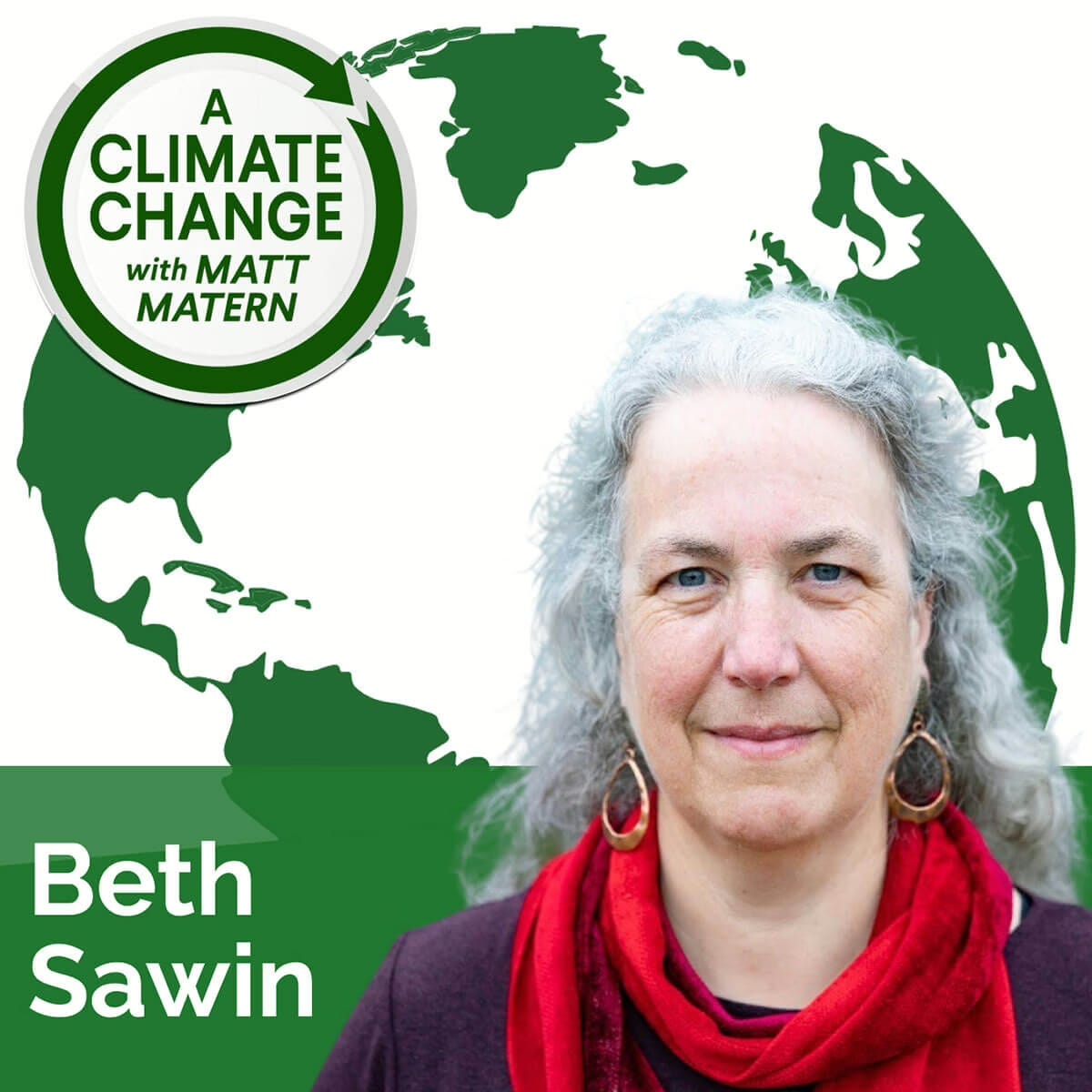
When we talk about climate success today, it’s not about things getting better overnight—it’s about making sure they get worse more slowly than they otherwise would. That sobering truth frames the work of Dr. Beth Sawin, a PhD biologist from MIT, founder and director of the Multi Solving Institute, author of Multi Solving: Creating System Change in a Fractured World, and co-creator of Climate Interactive.
Beth joined me on A Climate Change to unpack why solving our biggest crises means looking for solutions that address multiple problems at once.
From Lab Science to Systems Thinking
Beth began her career studying neurogenetics at MIT, but while she was immersed in the microscopic world, her heart was elsewhere—volunteering in nuclear disarmament and global environmental activism. A chance to work with systems thinker Donella Meadows, co-author of the 1972 Limits to Growth report, changed her path forever. She shifted from the microscope to the macro view, building computer models of complex environmental systems and finding her true calling in climate policy and multi solving.
What Is Multi Solving?
At its core, multi solving is about finding one action that solves many problems:
Planting trees in cities cools neighborhoods, cleans the air, prevents flooding, and improves mental health.
Designing walkable, bike-friendly streets reduces emissions, improves public health, and boosts local economies.
Energy efficiency in housing lowers emissions, cuts costs, and makes homes healthier to live in.
Instead of siloed fixes, multi solving builds partnerships across health, economy, and climate—transforming isolated efforts into systemic wins.
Crises as Opportunities
History shows us that crises can spark multi solving innovations:
Japan’s Fukushima Disaster: Factories created “green curtains” of edible plants, reducing energy demand while also providing fresh food.
New Zealand’s Financial Crisis: A downturn in construction led to government-funded home weatherization, which cut emissions, created jobs, and reduced hospital visits.
As Beth says, the key is to ask: What keeps you awake at night? And is there a way to solve that crisis while also easing someone else’s?
Why Health Is the Missing Climate Argument
One of Beth’s strongest points is that the fight against fossil fuels is also a fight for human health. The World Health Organization has found that the costs of transitioning away from fossil fuels are outweighed by the health savings alone. Air pollution from burning fossil fuels drives asthma, heart disease, dementia, and premature birth. Closing a coal plant doesn’t just help the climate—it immediately improves air quality and public health in nearby communities.
This health frame brings the global and long-term climate fight into the local and immediate present: protecting our kids, families, and communities today.
Building the Multi Solving Movement
So how do we make multi solving mainstream?
Beth emphasizes three things:
Relationships across sectors – health leaders, climate advocates, city planners, and businesses working together.
Equity and justice – ensuring that benefits are shared fairly, especially in communities historically burdened by pollution and inequality.
Solidarity – seeing each other’s crises as our own, not just forming temporary alliances of convenience.
As Beth puts it, this isn’t a trick. It’s simply expanding the conversation so short-term and long-term solutions reinforce each other.
A Call to Action
We live in that messy middle ground between “all is lost” and “nothing to worry about.” That’s why multi solving matters: it helps us act now, with solutions that ripple across time and across issues.
Want to dive deeper? Pick up Beth’s book Multi Solving: Creating System Change in a Fractured World and consider starting a book club. As Beth says, “the best thing you can do is gather a few people, read together, and look for local opportunities to multi solve.”