

Harvard historian of science Dr. Naomi Oreskes has spent decades digging into one of the most consequential questions of our time:
How do we know scientific knowledge is trustworthy - and why have powerful interests spent so long trying to undermine it?
In our latest episode, Naomi lays out the stunning history behind climate science, corporate denial, fossil-fuel disinformation, and the ongoing political attacks on scientific agencies. It’s a conversation that ranges from geology in the Australian outback to climate hearings in the 1960s to today’s coordinated rollback of environmental protections.
Below is a full write-up of our conversation - one of the most eye-opening we’ve hosted.
From Geologist to Leading Climate Historian
Naomi didn’t begin her career investigating misinformation - she started as a geologist, working in mineral exploration in the outback of Australia. She loved the hands-on detective work: rocks, minerals, and the deep stories the Earth holds.
But graduate school changed everything.
A single class in the philosophy of science opened her eyes to an entire field that studies how scientific knowledge is made - how we judge it, verify it, and understand its relationship to culture and politics.
“It was a eureka moment. I realized these were the questions I wanted to dedicate my life to.”
She went on to earn a joint PhD at Stanford in geological research and the history of science. And that path ultimately led her into the center of the climate debate.
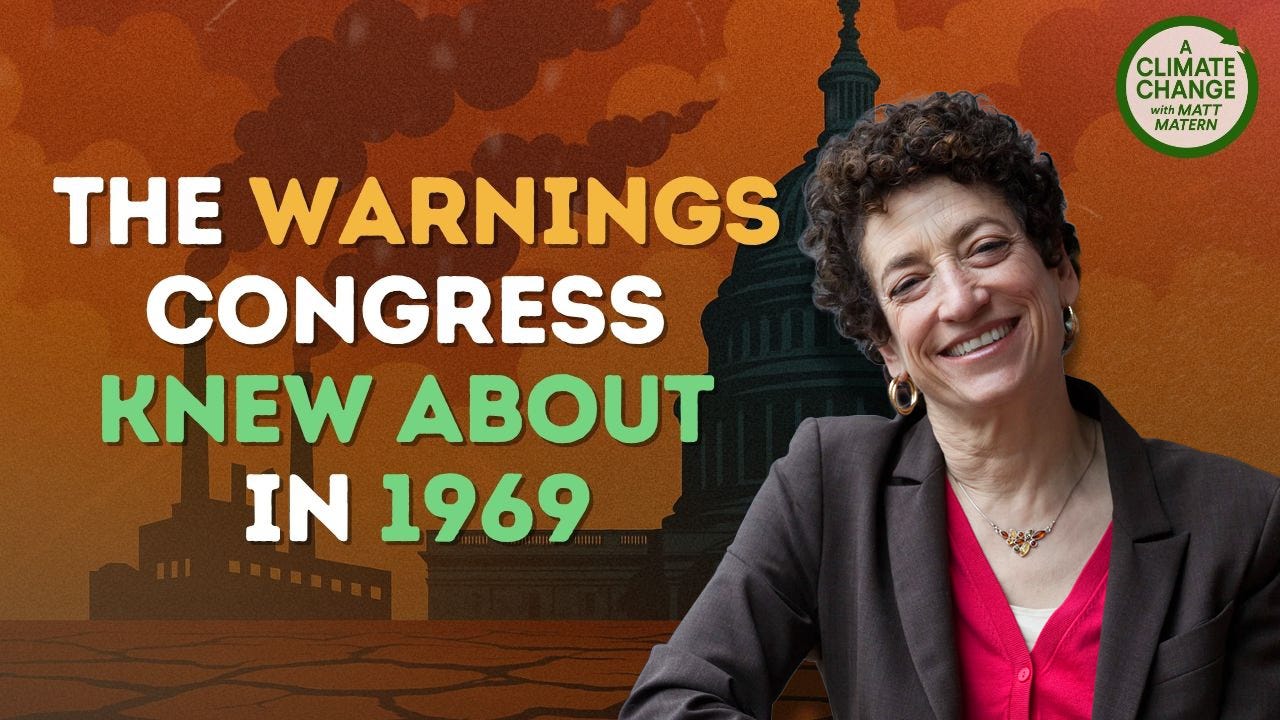
Congress Knew About Climate Change in 1969
One of the most striking things Naomi’s research has uncovered?
Congress understood the basics of climate change more than 50 years ago.
Her recent paper documents how scientists testified to Congress in the 1960s that:
burning fossil fuels increases atmospheric CO₂
increased CO₂ warms the planet
climate change would eventually have serious consequences
It was this testimony that led lawmakers to place the words “weather and climate” in the Clean Air Act.
This historical fact directly contradicts claims that “no one knew” about climate change when the law was drafted - arguments still used today to weaken climate regulations.
Why the Endangerment Finding Matters
We discussed the Trump administration’s current effort to dismantle the EPA’s endangerment finding, which legally classifies greenhouse gases as pollutants harmful to human health.
Naomi points out that climate change isn’t about “saving the planet” - the Earth will survive.
It’s about saving people.
Floods, fires, deadly heat waves, soaring insurance costs - it’s all happening now.
And as the EPA moves to eliminate climate protections, it has slashed scientific staff, directly undermining the scientific backbone of environmental regulations.
From Prediction to Proof - And Why That Sparked a Backlash
For decades, climate change was treated as a prediction. Something that would happen “eventually.”
That changed in 1988 when NASA scientist James Hansen demonstrated that warming had already begun. Once climate change became a measured fact, Naomi explains, two major shifts occurred:
Scientists mobilized globally, forming the IPCC.
The fossil fuel industry launched a massive disinformation campaign.
Right-wing think tanks, political operatives, and corporate interests began attacking climate science - not because it was uncertain, but because it was now undeniable.
Her first major book, Merchants of Doubt, documented how this campaign deliberately replicated the tobacco industry’s tactics.
Soft Denial: The Industry’s New Playbook
Today, oil giants rarely claim climate change is a hoax. Instead they use “soft denial”:
admitting climate change is real
claiming alignment with the Paris Agreement
publicly advertising biofuels and “net-zero” commitments
while simultaneously expanding fossil fuel production
Their own annual reports show investments completely inconsistent with Paris emissions targets.
“They say one thing. But they do another.”
And internal documents reveal that many of their high-profile “green” projects are nothing more than PR stunts.
The Big Myth: How American Business Sold Anti-Regulation Ideology
Naomi’s newest book, The Big Myth (with Eric Conway), traces how American corporations spent a century promoting the false idea that unregulated free markets equal personal freedom.
This ideology:
opposed workplace safety laws
defended child labor
resisted environmental protections
laid the foundation for modern climate denial
influences the Trump administration’s attack on science and regulation
The book shows how powerful interests reframed regulation — even life-saving regulation - as a threat to “freedom.”
Stranded Assets: The Real Driver of Denial
One of the most important insights Naomi shares:
Fossil fuel companies hold trillions of dollars in proven oil and gas reserves. If the world transitions off fossil fuels, those assets become worthless.
That economic reality fuels decades of denial. These companies are not just defending profits - they are defending entire balance sheets.
Meanwhile, the damage caused by climate change - from floods to heat waves - is skyrocketing into the trillions.
Climate Liability Is Coming
The scientific ability to attribute specific storms, floods, and heat waves to climate change has advanced dramatically. Courts are taking notice.
Naomi recently served as an expert for the landmark International Court of Justice case brought by Vanuatu, in which the ICJ ruled that industrialized nations can be held legally liable for climate damage.
More than 100 climate-related cases are active worldwide.
And fossil fuel companies are still not fully disclosing this liability risk to shareholders — a potential securities fraud issue.
Attacks on Science, Academia, and Free Inquiry
The conversation also turned to the political pressures facing universities and scientific institutions — including major budget cuts at Harvard and federal efforts to suppress climate terminology on government websites.
Naomi is blunt:
“If someone is trying to shut you up, it means you have something to say.”
The attacks on universities and scientific agencies are not about “free speech.”
They are about silencing research that threatens powerful economic interests.
What We Can Do
Naomi continues to fight misinformation through:
rigorous peer-reviewed research
public education
writing accessible articles
supporting climate litigation
speaking out on issues ranging from science denial to regulatory capture
Her message is clear:
Truth still matters. Facts still matter. Science still matters.
And defending them is essential to our survival.
Listen to the Full Conversation
This episode is packed with insight, clarity, and historical depth - the kind only Naomi Oreskes can bring.
🎧 Listen to the full interview on A Climate Change
📘 Check out her books The Big Myth and Merchants of Doubt
🔗 Follow her work and support science-based climate policy
great content but the audio is way too robot like.