

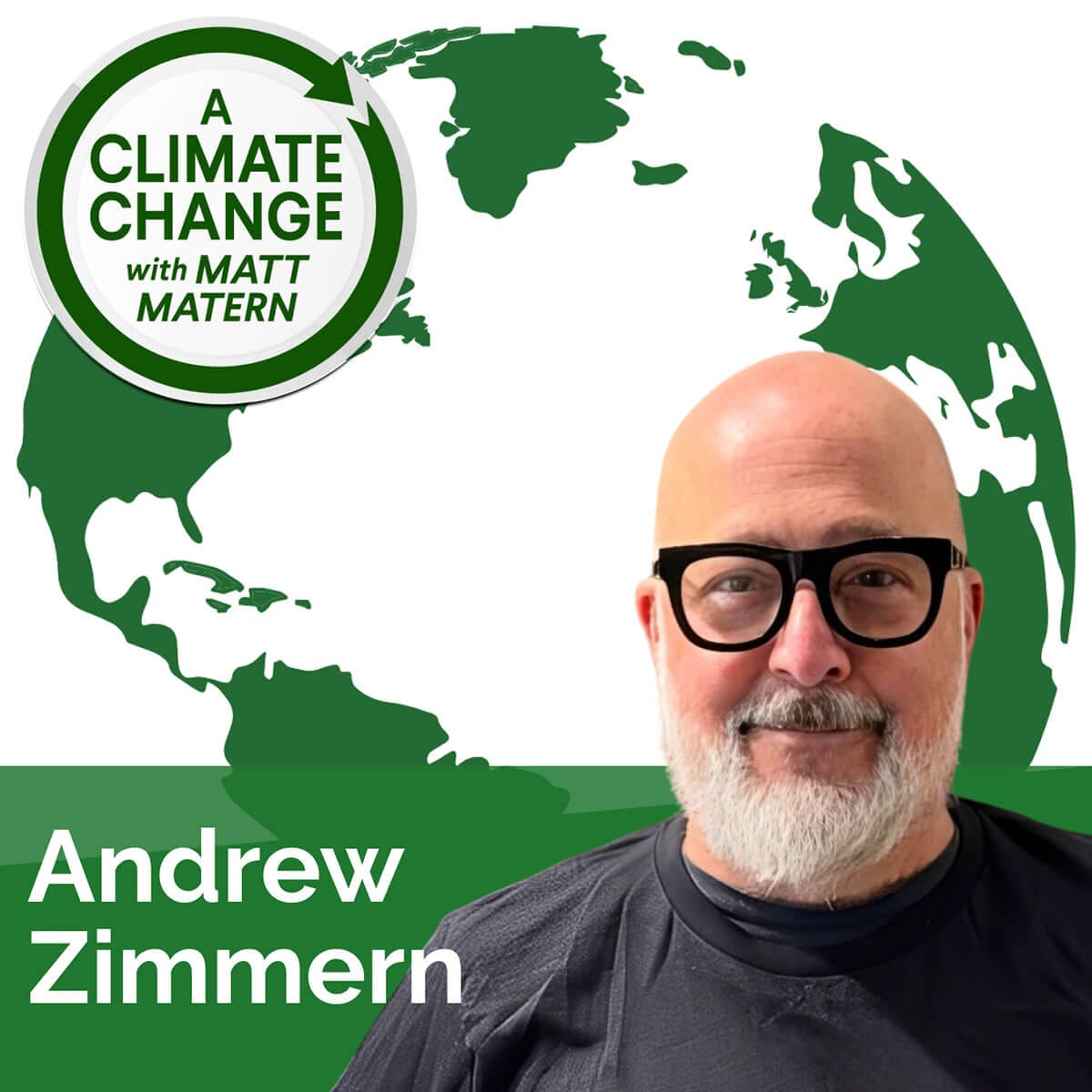
Our guest is Andrew Zimmern, James Beard Award-winning chef, Emmy-winning host of Bizarre Foods, author of The Blue Food Cookbook (out Oct 28th), and executive producer of the PBS docuseries Hope in the Water (with David E. Kelley).
“Chefs are the greatest activists and the best storytellers. We have the solutions - now we have to scale them.” — Andrew Zimmern
TL;DR
Industrial bottom trawls can turn living seafloor into a “Lord of the Rings” wasteland.
No-take zones show oceans rebound fast when we stop the harm.
Artisanal fishing communities + smart aquaculture can feed people and protect ecosystems.
At the counter, the right question isn’t “wild vs. farmed” - it’s “Is it fresh and sustainably produced?”
Use trusted guides (MSC, Seafood Watch, Ocean Wise, ASC) and vote with your dollars.
The problem you can picture
Zimmern doesn’t mince words about destructive fishing: imagine a massive net and steel “forks” plowing the seabed - life ahead, blackened desert behind. That visual sticks because it’s true. But here’s the hopeful flip: close waters to extraction and life snaps back - think Venice’s clear canals in 2020, or decades of science from marine reserves.
“Trust me, the ocean is resilient - if we stop abusing it.”
The heroes we often miss
Zimmern champions artisanal fishing communities: small boats, short trips, diverse catch, deep local knowledge. They:
Harvest reef and near-shore species that grow fast and taste fantastic.
Keep food and income in coastal towns.
Are ideal for co-ops that attract ethical finance (from local banks to multilaterals).
Protecting them isn’t nostalgia - it’s climate strategy.
Aquaculture - done right - works
We’ve learned from early mistakes (crowding, bad feed, copper nets). Today’s best-practice aquaculture:
Uses lower stocking densities, precision feeding, and waste control.
Relies on better feeds (by-products, algae, insect protein) approaching 1:1 conversion.
Can be ocean-based or land-based (RAS) with tight water and effluent management.
Zimmern’s stance: we need more well-run aquaculture to meet demand - alongside sustainable wild fisheries.
“It’s not ‘wild good, farmed bad.’ It’s ‘is it fresh and sustainably raised?’”
The storyteller’s edge (and David E. Kelley)
Zimmern’s PBS series Hope in the Water - shot on five continents - spotlights doers with solutions. Co-producer David E. Kelley (yes, Ally McBeal, Boston Legal) brought a masterclass in narrative “velocity”: every frame must move the story. Result: a docuseries that entertains and mobilizes.
How to buy ocean-smart seafood (simple, practical)
Ask two questions:
Where is it from? (country/region, wild fishery or farm)
Is it certified or recommended? (show me the rating)
Trustworthy guides & labels
MSC (Marine Stewardship Council) – wild capture
ASC (Aquaculture Stewardship Council) – farmed
Seafood Watch (Monterey Bay Aquarium) – app with regional “Best Choices”
Ocean Wise – recommendations (Canada + global)
Smart swaps to diversify beyond the “Big Five”
Try: mussels, oysters, clams (filter-feeders, low impact)
Swap to: sardines, mackerel, anchovies, herring (fast-growing, omega-rich)
Explore: under-known local species from day-boat fishers
For farmed: look for ASC-certified salmon, trout, barramundi, or land-based RAS operations
At restaurants
Ask: “What’s local and sustainable tonight?”
Reward places that name the fishery/farm on menus.
Why this matters now
Biodiversity & climate: Healthy seas store carbon; bottom-trawled deserts don’t.
Food security: Coastal communities feed nations if we back co-ops, cold-chain, and fair markets.
Health: Small pelagics and bivalves deliver nutrition with a tiny footprint.
From page to plate: The Blue Food Cookbook
Zimmern’s new cookbook pairs 145 approachable recipes with plain-English guidance on buying and cooking seafood confidently (plus beautiful photography). If you’ve ever felt lost at the counter, this is your field guide and kitchen coach in one.
Do something today (five quick actions)
Download Seafood Watch (or your preferred guide).
Ask your grocer/fishmonger where the fish is from and for a rated/certified option.
Cook a bivalve dinner this week (mussels are cheap, fast, and climate-smart).
Try one new species beyond salmon/tuna/shrimp/cod.
Support a local fisher co-op or CSA-style seafood share.
“Every dollar we spend is a vote.” (and yes, it counts)
About our guest
Andrew Zimmern is a chef, writer, and Emmy-winning TV host. He runs production company Intuitive Content, co-created the PBS series Hope in the Water, and advocates for ocean-smart food systems. His latest book, The Blue Food Cookbook, lands October 28.
Show notes & links
Hope in the Water (PBS on-demand + rebroadcasts)
The Blue Food Cookbook by Andrew Zimmern
Seafood buying guides: MSC, ASC, Seafood Watch, Ocean Wise
AndrewZimmern.com (newsletter, Substack, YouTube, books, restaurants)
Support our work & subscribe
We’re planting 30,000 trees in the Amazon this year. Learn more at aclimatechange.com and enjoy this episode on Apple, Spotify, or YouTube. If this episode resonated, share it with a friend.
plants4hunger.org