

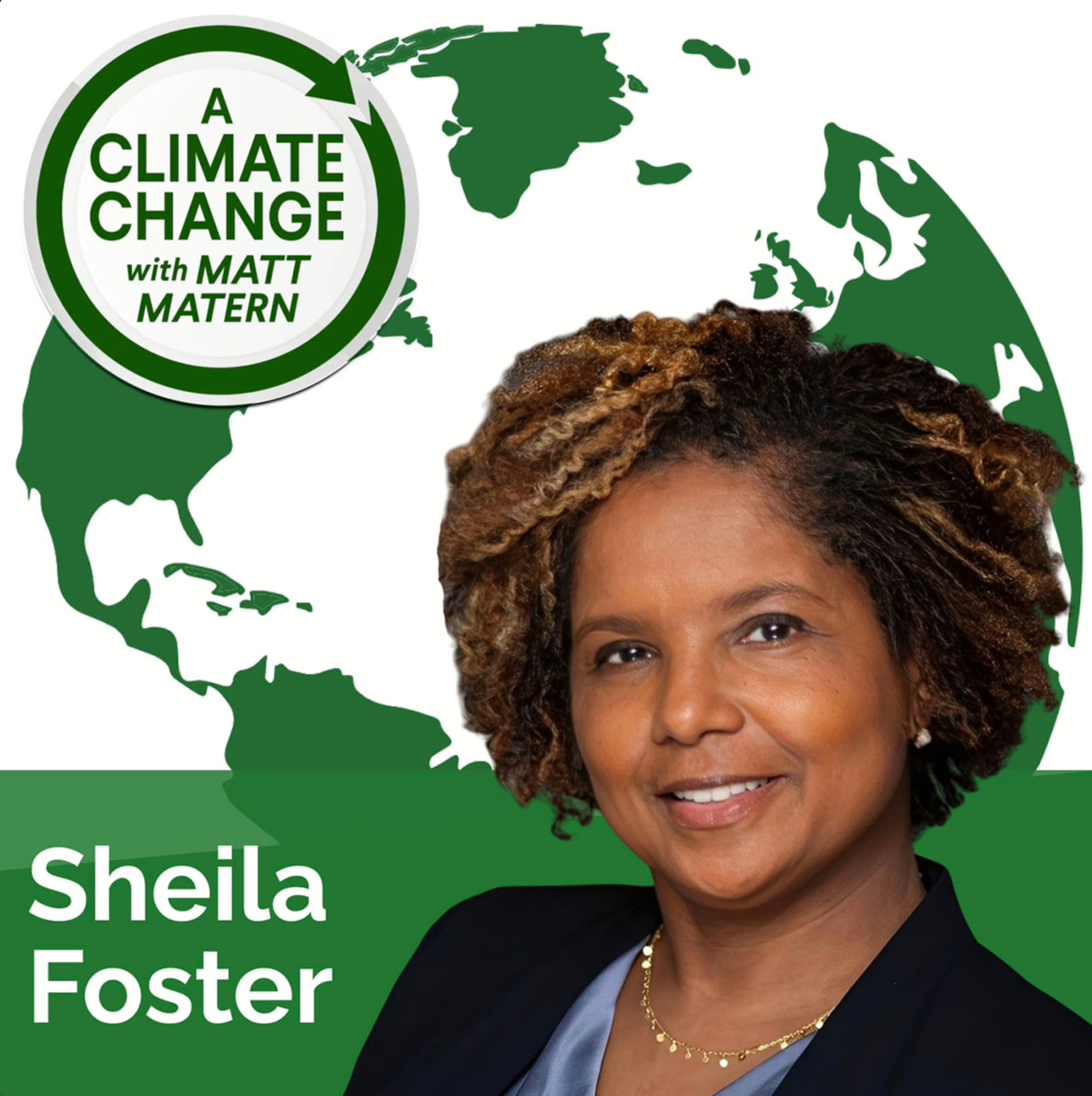
You’re reading A Climate Change with Matt Matern. Our guest is Dr. Sheila Foster - professor at Columbia, co-director of LabGov, and co-author of Co-Cities: Innovative Transitions Toward Just and Self-Sustaining Communities.
“Heat is the largest killer in terms of climate impacts.” - Dr. Sheila Foster
TL;DR
Extreme heat kills more people than any other climate impact.
The Co-City model uses collective governance to deliver practical fixes: community land trusts, community solar, neighborhood broadband, and green infrastructure.
Cities and states can lead - but they need an enabling policy environment and cross-sector teams to scale what works.
Case studies from Harlem and Baton Rouge show how quick wins restore trust and unlock bigger change.
Dr. Sheila Foster’s origin story
Foster’s path started in the 1990s working on environmental justice in urban communities near Rutgers/Camden. As climate risks intensified, she followed the same neighborhoods into the era of climate justice, documenting how historical development patterns amplify today’s impacts.
What is LabGov & the “Co-City” model?
LabGov is an applied research lab connecting cities in Europe, the U.S., and beyond around co-governance: residents, governments, universities, social entrepreneurs, and business co-designing and co-stewarding shared solutions.
Her book Co-Cities distills lessons from 200+ cities / 500+ projects, identifying design principles that show up when collaboration actually works.
The five design principles (in plain English)
Collective governance: decisions are shared - not just city hall or a legacy utility.
Enabling environment: policy, program, or law that authorizes collaboration.
Multi-sector teams (“the five-actor model”): public sector, private sector, knowledge institutions, community/social entrepreneurs, and civil society.
Access to appropriate tech: from mesh networks to edge computing that communities can own and operate.
Fit-for-place design: solutions tailored to local assets, capacity, and need.
“It’s not a romantic idea - it works under certain conditions. Our job is to surface those conditions.”
Why housing policy is climate policy
During heat waves, energy-inefficient buildings trap vulnerability: people can’t afford to cool leaky apartments; hospitals see spikes in heat illness.
Community land trusts + energy upgrades + (community) solar can:
keep housing affordable,
reduce energy burden, and
cut emissions,
all while building local wealth and resilience.
Case study: Community broadband in Harlem
When a “smart city” still leaves neighborhoods offline, climate and health risk widen. Lab-enabled partners in Harlem (including Silicon Harlem and the City) piloted community broadband with edge cloud servers and 5G interconnects - putting secure, high-speed access into public housing and small businesses. Result: better emergency comms, access to services, and economic opportunity - all climate resilience.
Case study: Baton Rouge “infrastructure desert”
In a four-mile area with vacancy, failing sidewalks, scant lighting, and little commerce, Dr. Foster’s team helped seed a community land bank & land trust, leveraged a $5M JPMorgan Chase AdvancingCities grant, delivered an early “quick-win” eco-park (bus shelter + flood relief + green space), and is advancing affordable housing and entrepreneur spaces.
Key lesson: quick, visible projects rebuild trust and attract patient capital.
Can this scale? Yes - with policy scaffolding.
Community solar, land trusts, and co-governed broadband scale when policy signals and subsidies lower friction. Local and state programs (and, where available, federal incentives) open the door. Remove the supports, and scaling slows. The workable formula:
Welcome mat: clear legal authority and program pathways.
Stackable incentives: to crowd in private/philanthropic capital.
Capacity partners: universities, CDFIs, community orgs.
“Big iron” vs. community solutions - it’s both/and
We need utility-scale wind and solar to decarbonize fast. But even with big projects online, targeted neighborhood solutions will still be essential to reduce energy costs, heat exposure, and inequity. Different investments solve different parts of the problem.
Politics, congestion pricing, and visible payoffs
On New York’s congestion pricing, Foster notes early metrics point to less traffic, safer streets, faster buses, and momentum for transit upgrades. The broader lesson: bold policy often looks costly until benefits become tangible in daily life.
Training the next generation
At the Columbia Climate School, Foster teaches law and master’s students who are eager to work in public-interest roles. University programs (loan relief, clinics, applied labs) are building the workforce to implement co-governed climate solutions at scale.
How you can help (action list)
Support community land trusts and community solar in your city; ask local officials about enabling ordinances.
Partner with a university (or LabGov-style group) to build capacity for grant writing and legal structures.
Invest in quick wins: shade, cooling centers, greenways, and safe transit stops during heat season.
Amplify models that work: share case studies with planners, councilmembers, and neighborhood leaders.
“When people see results on their block, they lean in. Trust is the first infrastructure.”
About our guest
Dr. Sheila Foster is a professor at Columbia University, co-director of LabGov, and co-author of Co-Cities. She has advised governments and global initiatives on urban resilience, sustainability, and equity.
Show support & stay connected
We’re planting trees in the Amazon this year. Learn more at aclimatechange.com and subscribe on Apple, Spotify, or YouTube. If this episode resonated, share it with a friend.
plantedsociety.org